Understanding Resistance and Its Role in Motor Testing
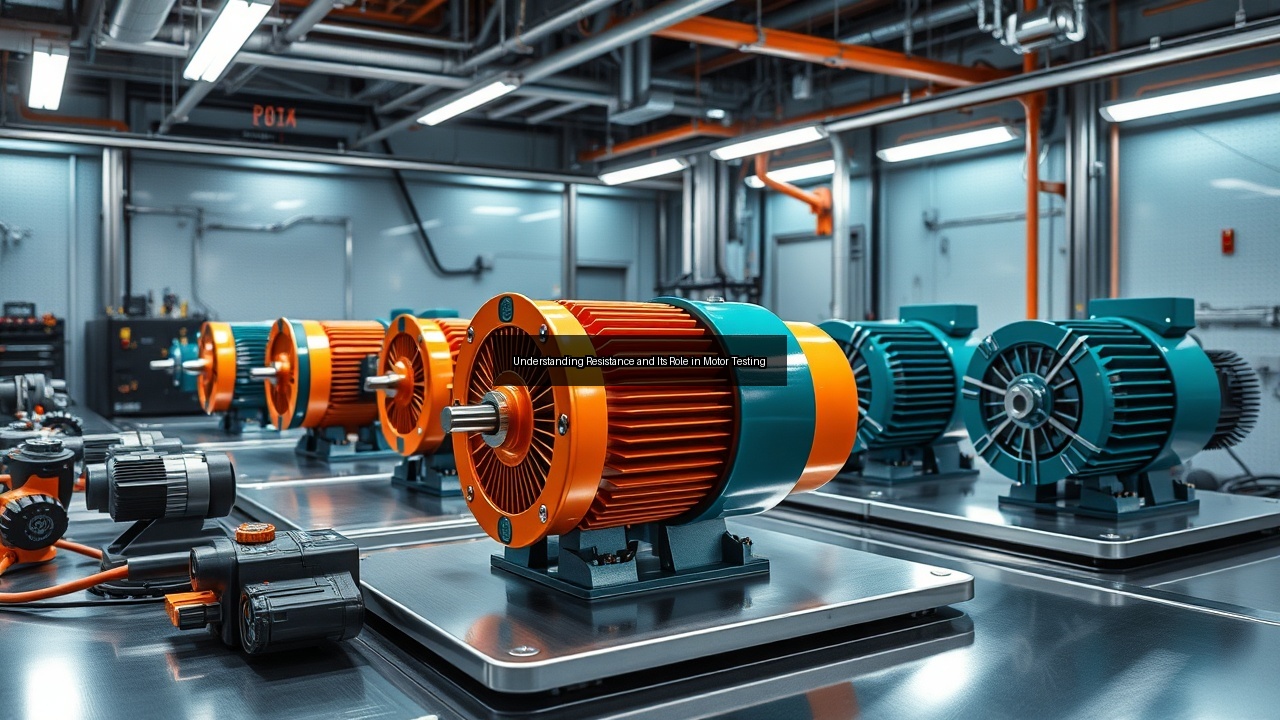
The Fundamentals of Motor Testing
Understanding Electric Motors
Electric motors serve as the backbone of countless applications, converting electrical energy into mechanical energy. These machines operate on the principles of electromagnetism, utilizing magnetic fields generated by electric currents. In various designs—such as AC, DC, and stepper motors—electric motors perform reliably across different environments and applications. Understanding the underlying principles of electric motors is crucial for effective motor testing. Engineers evaluate performance factors like speed, torque, and efficiency, ensuring that the motor operates within specified parameters. This evaluation provides insights into the motor’s health and longevity, guiding maintenance practices and operational decisions.
Key Components: Coils and Windings
Coils and windings form the heart of electric motors, playing a vital role in their operation. The coils consist of conductive wire wound into a specific shape, creating a magnetic field when current flows through them. This magnetic field interacts with permanent magnets or other coils to create motion. The arrangement of these windings—whether in a wye or delta configuration—affects the motor's performance characteristics, including efficiency and torque output. During motor testing, engineers measure the resistance of these coils to assess their condition. High resistance can indicate issues such as wear or insulation breakdown, while low resistance typically signifies optimal performance. Understanding these components enables more precise motor testing and evaluation.
The Role of Resistance in Motor Function
Resistance plays a critical role in electric motor function, influencing efficiency, heat generation, and overall performance. In simple terms, resistance is the opposition to the flow of electric current, measured in ohms. High resistance in motor windings can lead to energy losses and excessive heat, potentially causing failures. During motor testing, technicians measure the resistance across different windings to identify potential issues. Low resistance values indicate healthy coils, while higher values may suggest damage or degradation. Monitoring resistance over time aids in predictive maintenance, allowing for timely interventions before significant failures occur. Thus, understanding resistance not only informs motor function but also enhances the effectiveness of motor testing.
Evaluating Motor Performance
Measuring Voltage and Current
Measuring voltage and current is fundamental to evaluating motor performance. Technicians use multimeters and oscilloscopes to gather precise data on these electrical parameters. Voltage indicates the electrical potential driving the motor, motor analysis while current (measured in amps) reveals how much electricity the motor consumes during operation. Analyzing these metrics provides insights into the motor's efficiency and operational status. For instance, if the current draw exceeds normal levels while voltage remains stable, it may signal an underlying issue such as mechanical binding or shorted windings. By consistently measuring voltage and current during motor testing, engineers can identify deviations from expected performance, facilitating troubleshooting and ensuring optimal operation.
Temperature Effects on Motor Efficiency
Temperature significantly affects electric motor efficiency and longevity. As motors operate, they generate heat due to electrical resistance and mechanical friction. Excessive heat can lead to insulation breakdown, reduced performance, and ultimately motor failure. During motor testing, monitoring temperature is essential. Technicians often use thermal imaging cameras and temperature probes to assess the heat distribution within the motor. Uneven temperature profiles may indicate problems like misalignment or excessive load. Keeping within the manufacturer's recommended temperature range enhances efficiency and extends the motor's lifespan. Regular temperature evaluations during testing can prevent overheating, ensuring that the motor operates reliably under varying conditions.
Torque and Speed Analysis
Torque and speed are critical performance metrics in motor testing. Torque, a measure of rotational force, directly influences a motor's ability to perform work. Speed, measured in revolutions per minute (RPM), determines how quickly the motor can complete tasks. Engineers analyze the torque-speed characteristic curve to understand the motor's behavior under different loads. During testing, they employ dynamometers to measure torque and speed accurately. This analysis reveals how well the motor maintains performance across varying conditions. Deviations from expected torque and speed values can indicate mechanical problems, electrical issues, or design flaws. A thorough evaluation of these parameters is vital for ensuring optimal motor operation and reliability.
Advanced Motor Testing Techniques
Utilizing Software for Data Analysis
Advanced motor testing increasingly relies on software for data analysis, streamlining the evaluation process. Modern testing systems collect and analyze vast amounts of data during motor operation, including voltage, current, temperature, and vibration signatures. Sophisticated algorithms interpret this data, providing insights into performance trends and potential issues. Software tools allow engineers to visualize data in real-time, enhancing their ability to identify anomalies and make informed decisions. Predictive maintenance strategies can be developed based on historical data patterns, reducing unplanned downtime. As testing technology evolves, integrating software into motor testing becomes essential for optimizing performance and ensuring operational reliability.
Predictive Maintenance Strategies
Predictive maintenance strategies have transformed how industries approach motor testing and maintenance. By using data analysis and monitoring techniques, engineers can anticipate potential failures before they occur. This proactive approach minimizes downtime and extends the life of electric motors. During motor testing, vibration analysis, temperature monitoring, and electrical measurements provide critical insights into motor health. For example, observing changes in vibration patterns can indicate mechanical wear or misalignment. Implementing predictive maintenance not only reduces costs associated with emergency repairs but also enhances overall operational efficiency. Companies adopting these strategies see significant improvements in reliability and customer satisfaction.
Harmonic and Eccentricity Measurements
Harmonic and eccentricity measurements play a vital role in advanced motor testing. Harmonics refer to voltage or current waveforms that deviate from the ideal sinusoidal shape, often caused by non-linear loads or poor power quality. These distortions can lead to increased heating and reduced motor efficiency. Engineers use harmonic analyzers to assess the harmonic content in motor systems, enabling them to identify potential issues and implement corrective measures. Eccentricity, on the other hand, refers to the misalignment of the rotor within the stator. This misalignment can result in uneven wear, increased vibration, and decreased performance. Accurate measurement of these parameters during motor testing ensures that motors operate efficiently and reliably, minimizing the risk of failure.
Troubleshooting and Diagnostics in Motor Testing
Common Failure Indicators
Identifying common failure indicators is essential in troubleshooting electric motors. Several signs suggest that a motor may be experiencing issues, including unusual noises, excessive vibration, and abnormal temperature increases. These indicators often point to problems such as bearing failure, electrical imbalances, or insulation breakdown. During motor testing, technicians observe these symptoms closely, correlating them with performance data. Understanding these failure indicators allows for timely interventions, preventing further damage and costly repairs. Regular testing and monitoring enable engineers to develop a comprehensive understanding of motor health, ensuring that they can act swiftly when problems arise.
Insulation Testing with Hipot
Insulation testing is a critical step in motor diagnostics, and Hipot testing is one of the most effective methods used. This process applies high voltage to the motor's insulation system, measuring its ability to resist electrical breakdown. Successful insulation testing ensures that the motor can operate safely under normal conditions, preventing short circuits and electrical hazards. During testing, technicians monitor both the voltage applied and the resulting current flow, which should remain within acceptable limits. If the current exceeds thresholds, it indicates compromised insulation, necessitating repairs or replacement. Regular insulation testing helps maintain motor reliability and safety, making it an integral part of the motor testing process.
Vibration Analysis for Motor Health
Vibration analysis serves as a powerful tool in assessing motor health and performance. By measuring the vibrations produced during operation, engineers can identify mechanical issues such as misalignment, imbalance, or bearing wear. Advanced vibration analysis equipment captures data on frequency, amplitude, and phase, providing a comprehensive understanding of the motor's condition. During motor testing, this analysis reveals patterns that might indicate impending failures. Engineers can then implement corrective actions before significant downtime occurs. Regular vibration assessments not only enhance motor reliability but also contribute to overall system efficiency, ensuring that electric motors perform optimally throughout their lifespan.