Unlocking the Power of Ceramic Backing in Welding Applications
Understanding Ceramic Backing in Welding
What is Ceramic Backing?
Ceramic backing for welding provides a rigid, heat-resistant support placed behind the joint to contain the molten pool and shape the root pass. Welders position these strips or tiles directly against the metal edges so the arc creates a consistent bead without burn-through. The material withstands intense temperatures while remaining chemically inert, preventing contamination in the finished weld. Fabricators cut or shape ceramic backing material to match joint geometry, ensuring full contact along straight seams or curved sections. This approach eliminates the need for permanent steel backing bars that must later be ground away. Users apply adhesive or mechanical fasteners to hold the ceramic in place during setup. Once the weld cools, the backing detaches cleanly, leaving a smooth underside ready for inspection or coating.
The Role of Ceramic Materials in Welding
Ceramic materials serve as temporary molds that guide the weld metal into proper shape during the root pass. Their low thermal conductivity slows heat loss, allowing better fusion along the joint line. Welders select ceramics with specific densities and surface textures to control how the molten pool flows and solidifies. In aluminium and stainless applications, the non-reactive surface avoids carbon pickup that could weaken the weld. The backing also directs shielding gas coverage when used with processes that require extra protection at the root. Fabricators often combine ceramic tiles into longer runs for pipe or plate work, creating continuous support that matches the torch path exactly. This precise alignment improves consistency across multiple passes and reduces rework caused by incomplete penetration.
Benefits of Using Ceramic Backing for Welds
Ceramic backing for welds delivers clean root profiles without extra grinding or back gouging. Welders achieve higher deposition rates because they weld from one side only, cutting labor time on large assemblies. The material prevents spatter adhesion on the reverse side, simplifying cleanup before painting or coating. Because ceramics resist cracking under thermal shock, they maintain support even during long, continuous runs. Fabricators report fewer defects such as porosity or lack of fusion when using properly fitted backing. The lightweight nature of ceramic tiles makes them easy to reposition on vertical or overhead joints. Overall, these advantages improve productivity while meeting strict code requirements for structural and pressure applications.
Types of Ceramic Backing Materials
Comparing Ceramic Backing Options
Backing materials vary in thickness, width, and surface finish to suit different joint designs. Standard strips measure 102mm wide and come in flat or grooved profiles that influence bead shape. Higher-density ceramics withstand longer arcs and higher amperage, while lighter versions suit thin-gauge work. Some products feature adhesive backing for quick attachment, whereas others rely on clamps or tape. Welders compare these options based on how well each maintains alignment under vibration or heat expansion. The choice also depends on whether the application involves repeated use or single-pass fabrication. Matching the correct ceramic backing material to the base metal thickness and welding position ensures optimal results without excessive waste.
Gullco International's Ceramic Products
Gullco International supplies KATBAK ceramic backing systems designed for mechanized and manual welding setups. Their tiles feature precision-molded grooves that produce uniform root reinforcement on plate and pipe. Gullco engineers the material to release cleanly after welding, leaving minimal residue on the joint. Fabricators pair these products with Gullco’s track-mounted carriages for consistent torch speed across long seams. The company offers widths and lengths that match common fabrication requirements, reducing the need for on-site cutting. Welders note improved consistency when using Gullco ceramics with automated equipment because the backing stays fixed even during high-speed travel. This reliability supports high-volume production where joint quality must remain constant from the first weld to the last.
Voestalpine's Innovations in Ceramic Backing
Voestalpine develops advanced ceramic backing formulations that tolerate higher heat inputs and extended arc times. Their products incorporate refined grain structures that resist spalling when exposed to repeated thermal cycles. Fabricators use these ceramics in demanding environments where standard materials might fracture before the weld completes. Voestalpine also supplies pre-cut shapes that fit complex geometries found in heavy equipment and pressure vessels. The backing integrates well with both manual and robotic torches, maintaining stable support even as the welder adjusts parameters mid-pass. These innovations help reduce downtime caused by backing failure and improve overall weld integrity across varied metal thicknesses.
Applications of Ceramic Backing in Various Welding Techniques
Ceramic Backing in TIG Welding
TIG welding benefits from ceramic backing because the process demands precise control of the weld pool. The backing supports the root without introducing oxygen that could oxidize the bead. Welders position the ceramic flush against the joint so the tungsten electrode maintains a steady arc distance. This setup proves especially useful on thin aluminium sections where burn-through occurs easily. The non-conductive ceramic surface prevents arc wander that might otherwise distort the weld path. Fabricators often combine ceramic backing with custom fixtures to hold pipe or tank seams in exact alignment. The result is a smooth, fully penetrated root that requires little post-weld finishing before pressure testing or coating application.
The Impact of Ceramic Backing on MIG and GMAW
MIG and GMAW processes gain speed and consistency when ceramic backing supports the joint. The backing contains the higher deposition rates typical of these methods, allowing continuous wire feed without root collapse. Welders adjust voltage and wire speed while relying on the ceramic to shape the underside bead. This combination reduces the need for multiple passes on thicker plate. The material also limits spatter buildup on the reverse side, keeping the weld zone cleaner for subsequent operations. Fabricators report fewer repairs when using ceramic backing material sized to the expected bead width. The technique supports both short-circuit and spray transfer modes across carbon steel, stainless, and aluminium applications.
Using Ceramic Backing in Plasma Cutting
Plasma cutting setups sometimes incorporate ceramic backing to stabilize the cut edge on the far side of the plate. The material protects underlying surfaces from molten ejecta and helps maintain straight geometry along the cut line. Operators position ceramic tiles beneath the workpiece to absorb heat and prevent warping on thin sections. This approach improves edge quality when cutting intricate shapes or long straight cuts. Welders later use the same ceramic pieces as backing during the welding phase, creating a reusable workflow. The technique works well in job shops that combine cutting and joining operations on the same metal stock.
Best Practices for Using Ceramic Backing
Preparing Your Workspace with Ceramic Backing
Proper preparation starts with cleaning both the joint and the ceramic surface to remove oil, rust, or dust. Welders align the backing so it sits flush and covers the full length of the seam without gaps. They mark the ceramic position before tacking so adjustments remain minimal once welding begins. Clamps or adhesive hold the material firmly in place, especially on vertical or overhead joints where gravity can shift the backing. Checking fit-up with a straightedge ensures uniform contact that prevents the root bead from sagging. This attention to detail at the setup stage directly influences final weld quality and reduces time spent on corrections afterward.
Combining Ceramic Backing with Protective Gear
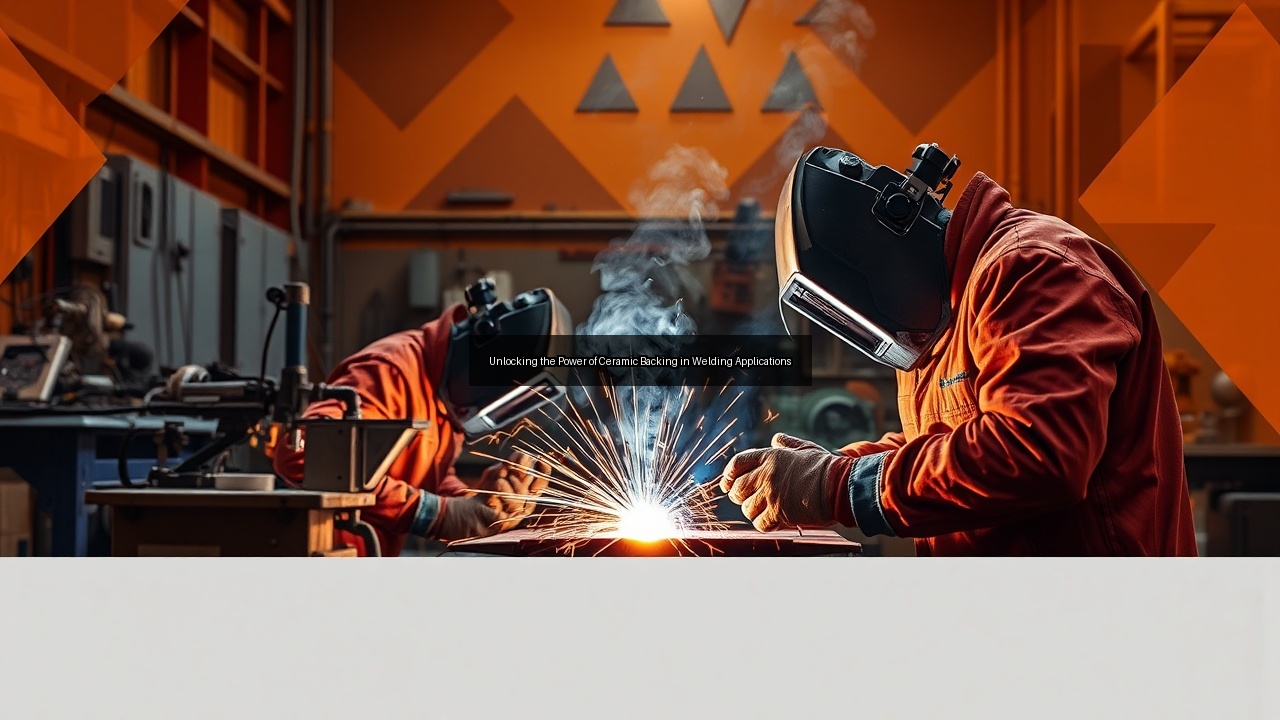
Welders pair ceramic backing with appropriate protective gear to maintain safety during high-heat operations. Welding helmets with proper shade selection shield the eyes from intense arc light while the backing supports the joint. Heat-resistant gloves and aprons protect against sparks that may escape around the ceramic edges. Respirators become important when welding materials that release fumes, because the backing can trap some gases near the root. Fabricators also position fire-resistant blankets around the work area to contain any stray spatter. Integrating these elements creates a controlled environment that supports both welder safety and consistent weld results.
Maintenance and Care for Ceramic Backing Materials
Ceramic backing materials last longer when stored flat and protected from impact that could chip the edges. After each use, operators remove slag and spatter with a soft brush rather than abrasive tools that might damage the surface. Inspecting tiles for cracks before reuse prevents sudden failure during a weld. Damaged sections are replaced promptly so the next joint receives full support. Keeping an inventory of standard sizes allows quick replacement without delaying production. Proper care extends the service life of each piece and maintains the dimensional accuracy needed for repeatable weld quality.
Future Trends in Welding with Ceramic Backing
Automation and the Use of Ceramic Backing
Automation systems increasingly incorporate ceramic backing to support robotic torch paths on large fabrications. Sensors confirm backing alignment before the robot begins welding, reducing setup errors. The consistent support allows higher travel speeds without compromising root quality. Fabricators program machines to apply adhesive-backed ceramic tiles at precise intervals, matching the weld sequence exactly. This integration improves throughput in shipyards and structural shops where repetitive joints dominate production schedules. As automation expands, ceramic backing materials designed for robotic handling will become standard components in welding cells.
Advancements in Ceramic Technology for Welders
New ceramic formulations offer improved thermal shock resistance and tighter tolerances on groove dimensions. Laser-sintered tiles provide smoother surfaces that reduce turbulence in the weld pool. Some products now include embedded indicators that change color when maximum heat exposure is reached, signaling replacement time. These advancements help welders maintain quality across longer shifts and varied metal thicknesses. Research continues into hybrid ceramics that combine flexibility with high-temperature strength for specialized marine and pipeline applications. The ongoing development keeps ceramic backing relevant as welding processes evolve toward higher productivity and stricter inspection standards.
The Role of Ceramic Backing in Marine Welding Applications
Marine fabricators rely on ceramic backing for welding hull seams and structural members where access from both sides is limited. The material supports one-sided welding on thick plate while maintaining watertight root profiles. Saltwater environments demand backing that resists corrosion and does not introduce contaminants that could accelerate degradation. Welders select ceramics compatible with aluminium and high-strength steels common in ship construction. The technique reduces the need for staging on the reverse side of large panels, improving safety and efficiency in confined spaces. As vessel designs incorporate more complex geometries, ceramic backing continues to enable reliable joints that meet classification society requirements.